There is something that happens when you put on the right outfit before a job interview. It is not just about looking good for the hiring manager across the table. It is about how you carry yourself when you walk into that room, how you sit, how you speak, and how much mental energy you spend thinking about your clothes versus the conversation you came there to have.
The right interview outfit removes clothing from your list of things to worry about on one of the more high-stakes mornings of your professional life. It does that by being appropriate for the environment, well-fitted enough to feel natural, and composed enough that you feel like the best version of yourself rather than someone wearing a costume.
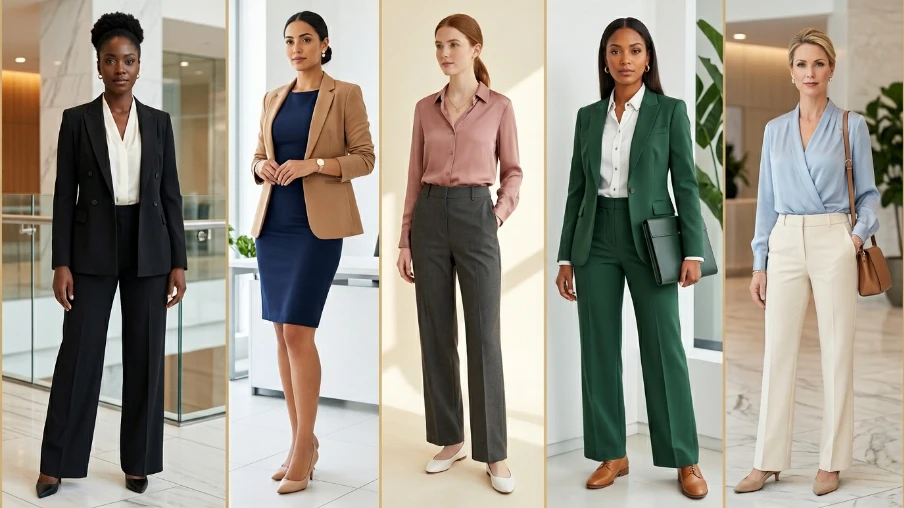
These 18 interview outfit ideas cover every industry, dress code level, and personal style direction you might be working with in 2026, with practical guidance on how to put each look together and what to consider when choosing between them.
1. Classic Navy Suit
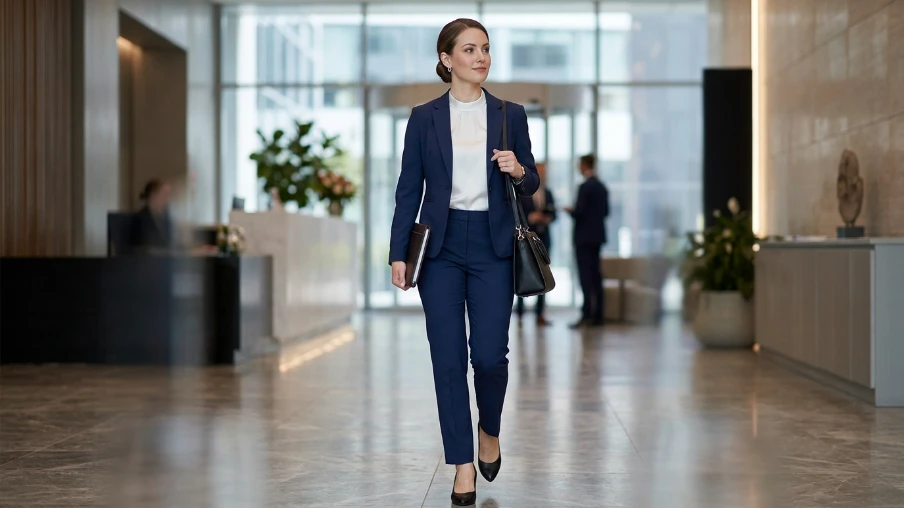
A well-fitted navy suit is the most consistently reliable formal interview outfit for corporate, finance, legal, and traditional business environments. Navy is considered more approachable and slightly less severe than black in professional dressing while maintaining the full formality that these industries expect from candidates.
Pair a navy suit with a crisp white dress shirt and a simple tie in a coordinating color, burgundy, silver, or deep blue, for men. For women, a navy suit with a white blouse or a subtle printed shell beneath the jacket creates a complete and authoritative interview look. The fit of the suit is as important as the color choice. A suit that fits poorly, regardless of its quality or brand, undermines the polished appearance you are trying to project.
Have the suit pressed rather than ironed if possible before the interview, and check the buttons and hems the night before to avoid discovering any issues on the morning of the appointment.
2. Tailored Black Trousers with a Blazer
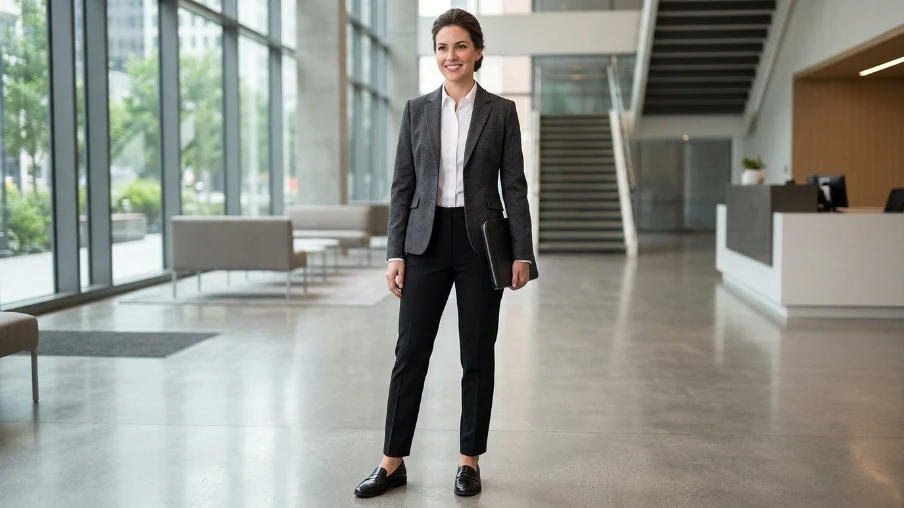
A pair of well-tailored black trousers paired with a matching or coordinating blazer creates one of the most versatile and broadly appropriate business professional interview outfits available. This combination works for men and women equally and suits corporate, marketing, management, and mid-level professional interviews across most industries.
The key to making this combination look polished rather than simply like two separate pieces worn together is ensuring that the blazer and trousers are either a true matching suit or are both in colors that deliberately coordinate rather than attempting to match without quite succeeding. A black trouser with a charcoal blazer is more intentionally mismatched than a black trouser with a near-black blazer that almost matches but not quite.
Add a white or light blue shirt for men, and a silk blouse or structured top for women, and the combination is complete for most formal and business professional interview settings.
3. Business Casual Chinos and Dress Shirt
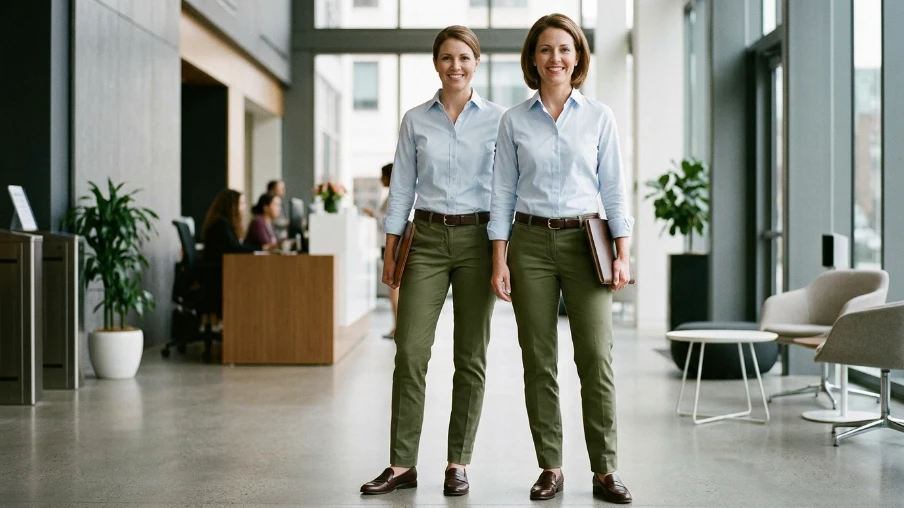
For industries where full formal business attire would be considered overdressed, a pair of well-fitted chino trousers in a neutral tone paired with a pressed dress shirt creates a smart, approachable business casual interview outfit that communicates professionalism without over-formality.
Chinos in navy, charcoal, camel, or olive work equally well for interview settings. Avoid chinos that are visibly wrinkled, have frayed hems, or fit poorly at the seat or thighs, as these details are disproportionately visible in interview settings where your overall presentation is being assessed. A tucked-in dress shirt or a half-tuck with a structured shirt works for most business casual interview environments. Add leather shoes or clean leather loafers to complete the look.
4. Shift Dress with a Blazer
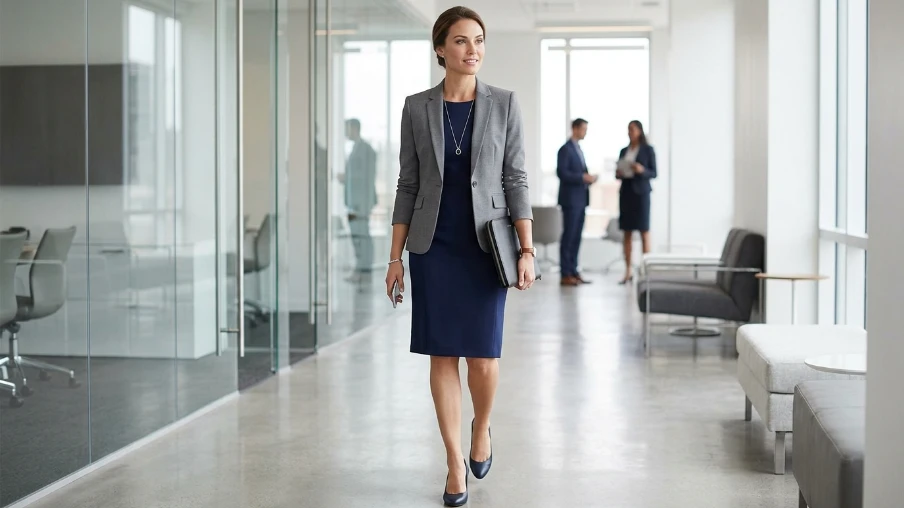
A fitted or A-line shift dress in a solid neutral color paired with a tailored blazer over the top is one of the most practical and consistently flattering interview outfit ideas for women because it provides the polished, put-together quality of a suit without the rigidity of matching separates.
A shift dress in navy, charcoal, camel, or deep burgundy with a blazer in a coordinating neutral creates an interview look that suits corporate, consulting, banking, and most mid-to-senior level professional interview contexts. The dress beneath the blazer should sit at knee length or just below for the most formally appropriate result, and the blazer should be well-fitted at the shoulders without pulling across the back when the arms are in normal positions.
Quick Reference Table: Interview Outfit Ideas at a Glance
| Outfit Idea | Industry Fit | Dress Code Level | Key Item | Footwear |
|---|---|---|---|---|
| Navy Suit | Corporate and legal | Business formal | Tailored suit jacket | Oxford or court shoe |
| Chinos and Dress Shirt | Tech and creative | Business casual | Well-fitted chinos | Leather loafers |
| Shift Dress with Blazer | Corporate and consulting | Business professional | Tailored blazer | Block heel or flat |
| Midi Skirt and Blouse | Marketing and media | Smart casual | Structured blouse | Low heel or flat |
| Turtleneck and Trousers | Creative and tech | Smart casual | Fitted turtleneck | Clean leather shoe |
| Pencil Skirt and Blazer | Finance and law | Business formal | Fitted pencil skirt | Court shoe or pump |
| Dark Jeans and Blazer | Startup and casual | Business casual | Quality dark denim | Clean sneaker or loafer |
5. Pencil Skirt and Structured Blazer
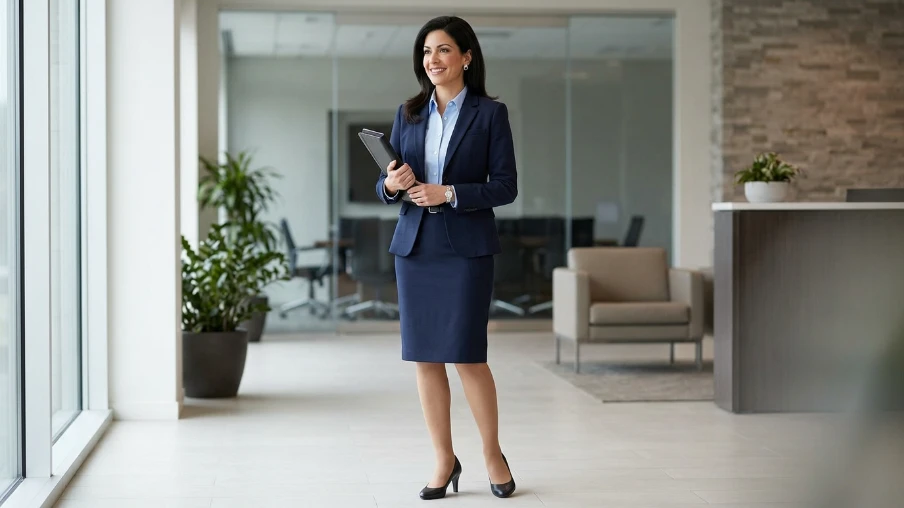
A fitted pencil skirt in a neutral tone paired with a structured blazer is one of the most authoritative and formally appropriate interview outfit ideas for women in finance, law, corporate communications, and senior-level professional roles. The tailored silhouette of the pencil skirt combined with the structured shoulder line of the blazer creates a professional image that communicates both competence and attention to personal presentation.
Choose a pencil skirt that sits at or just below the knee and fits smoothly across the hips without pulling or creasing when you sit. Interview situations involve sitting for extended periods and a skirt that shifts, rides up, or feels uncomfortable while seated creates a physical distraction that takes attention away from the conversation. Test the sitting position at home before the interview day to confirm the skirt works comfortably in a seated position.
6. Tailored Midi Skirt with a Blouse
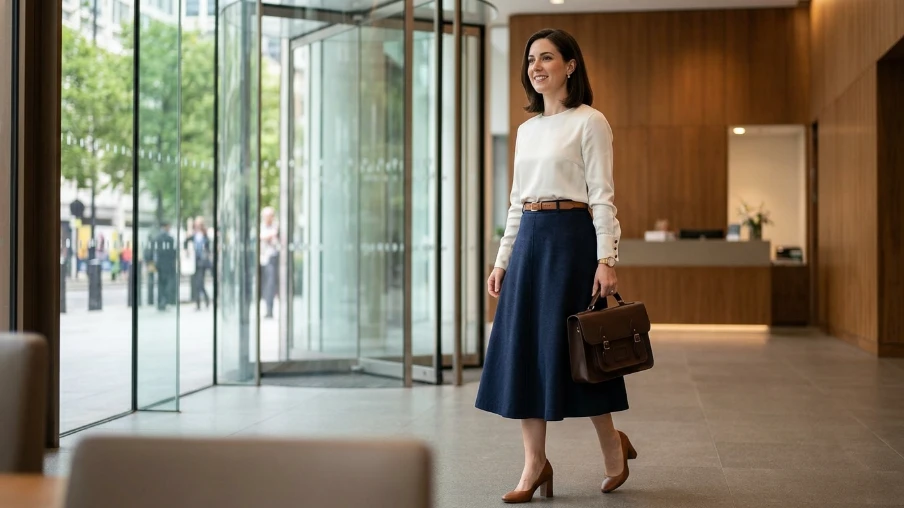
A tailored midi skirt, falling somewhere between the knee and the ankle, paired with a structured or silk blouse is one of the most contemporary and polished interview outfit ideas for women that suits a wider range of industries and workplace cultures than a traditional pencil skirt and blazer combination.
The midi length creates an elegant and modern professional silhouette that suits marketing agencies, publishing houses, creative consultancies, and modern corporate environments where the dress code is professional but slightly more fashion-aware than traditional financial or legal sector expectations. Choose a midi skirt in a solid color or a subtle pattern and pair with a blouse in a coordinating tone for the most cohesive result.
7. Turtleneck with Tailored Trousers
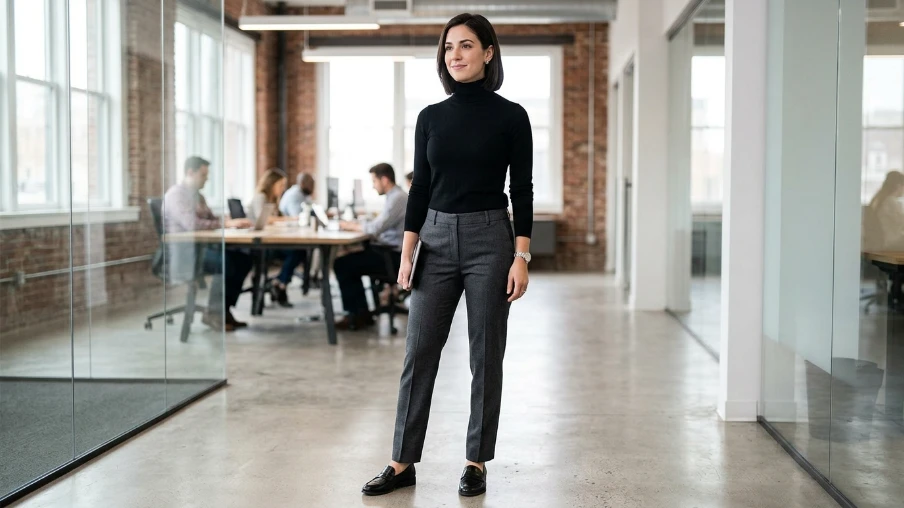
A fitted turtleneck in a quality knit fabric paired with well-tailored trousers creates a smart casual interview outfit that suits creative industries, technology companies, and design-oriented workplaces where a traditional suit would communicate the wrong cultural fit.
A black or charcoal turtleneck with matching or coordinating trousers creates a sleek, monochrome professional image that reads as intentional and considered without the formality of a collared shirt and jacket. The turtleneck needs to be genuinely fitted rather than baggy to achieve the polished effect this combination requires. A loose or oversized turtleneck in an interview context looks casual rather than considered.
8. Dark Wash Jeans with a Blazer
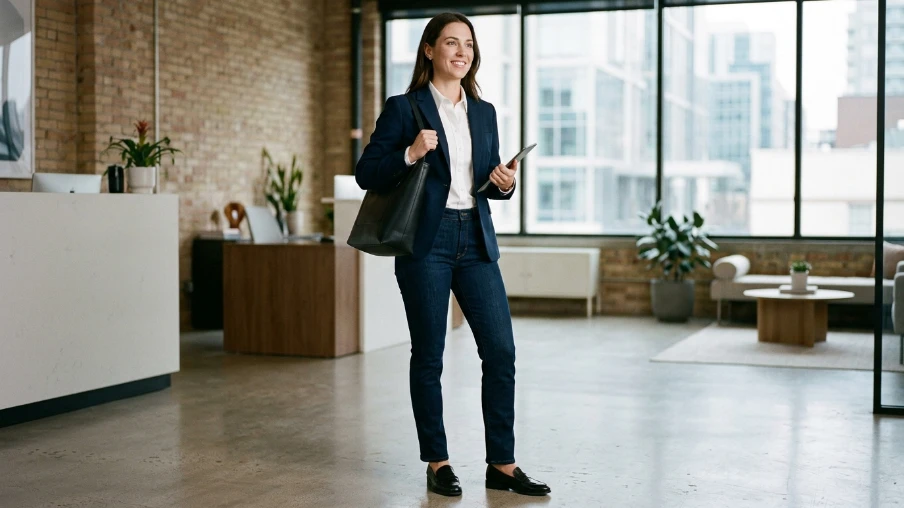
Dark wash denim with a tailored blazer is one of the most useful business casual interview outfits for technology companies, startups, and creative industries where a full suit would feel out of place but arriving in completely casual dress would not create the right first impression.
The denim must be a genuine dark indigo or near-black wash with no visible fading, distressing, or decorative details for this combination to work at a professional level. A clean, dark, well-fitted jean that shows no visible stretch or bagging at the knees reads as smart casual rather than casual. Pair with a white or light-colored dress shirt or blouse beneath the blazer and clean leather shoes or quality leather-look loafers to complete the interview-ready look.
9. Dress Pants with a Silk Blouse
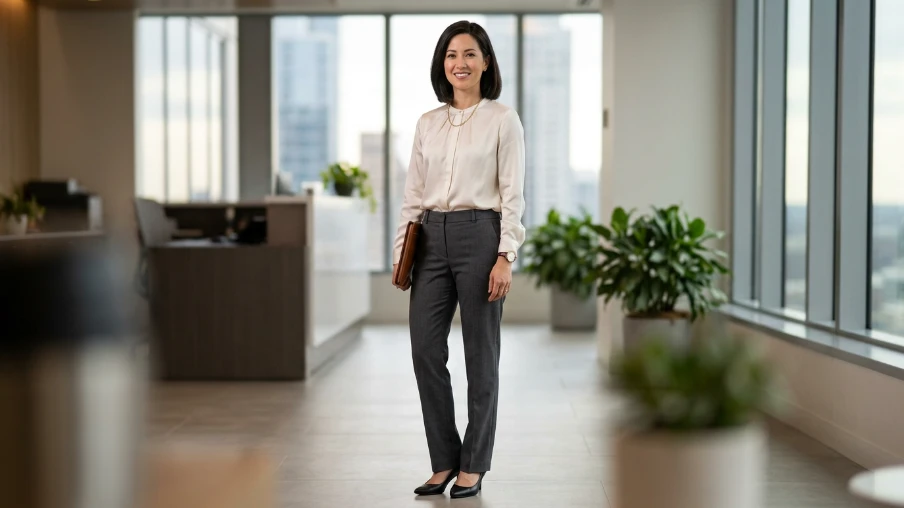
Well-tailored dress pants in a neutral tone paired with a silk or silk-effect blouse is a professional interview outfit combination that suits women in mid-to-senior level roles across most industries. The dress pant creates a clean, structured lower half while the silk blouse adds elegance and a subtle indication of quality through its fabric and drape.
Choose dress pants in charcoal, navy, camel, or black for the most versatile and formally appropriate result. The blouse should be tucked in for the most polished appearance and should not be sheer enough to require an additional layer beneath. A simple blouse in ivory, pale blue, or a subtle print creates the complete professional outfit when paired with a well-fitted trouser.
10. Monochrome Business Professional Look
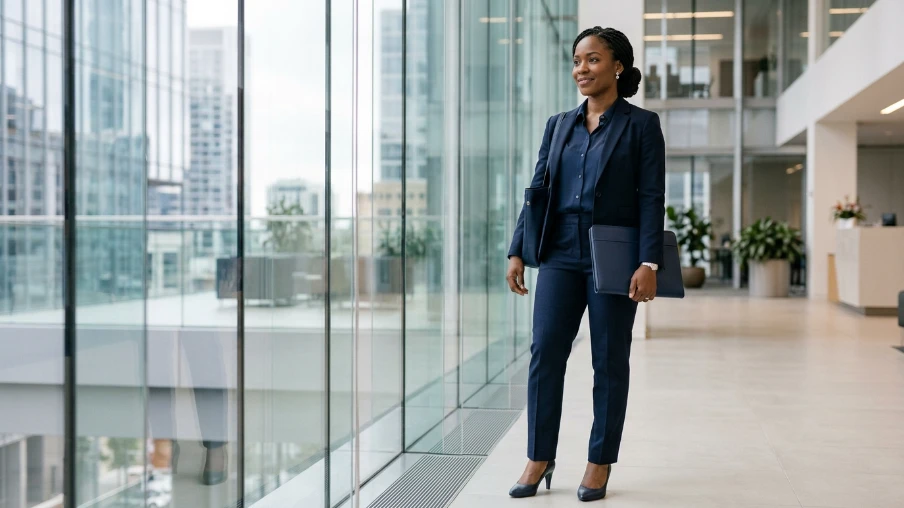
A monochrome interview outfit, where the top and bottom piece are in the same color family from light to dark tones, creates one of the most visually sophisticated and elongating professional looks available. An all-navy ensemble of tailored trousers and a navy blouse, or an all-grey combination of charcoal trousers with a light grey shirt, creates a complete and carefully considered career outfit that reads as both stylish and genuinely professional.
The monochrome approach works particularly well in interview contexts because it creates a unified, streamlined visual impression that is immediately read as intentional and self-aware in terms of personal presentation. Add interest through texture variation, a matte trouser fabric with a silkier blouse, rather than adding additional colors that break the monochrome cohesion.
11. Women’s Pantsuit
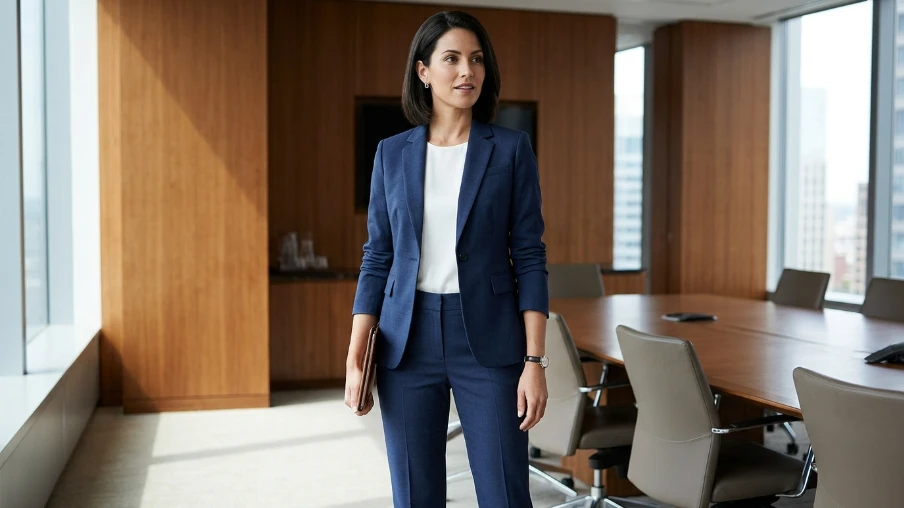
A women’s pantsuit in a quality fabric is one of the strongest and most confident interview outfit ideas available for formal and corporate interview settings. The complete suit communicates authority, preparation, and a clear professional self-awareness that sits well in finance, corporate law, senior management, and any role where leadership qualities are part of what the hiring process is assessing.
Choose a women’s pantsuit in a traditional professional color, navy, charcoal, or a muted check pattern, for the most broadly appropriate interview result. A well-fitted pantsuit with a blouse or structured top beneath creates a complete formal interview look that suits virtually every corporate and professional interview context.
12. Smart Business Casual for Creative Fields
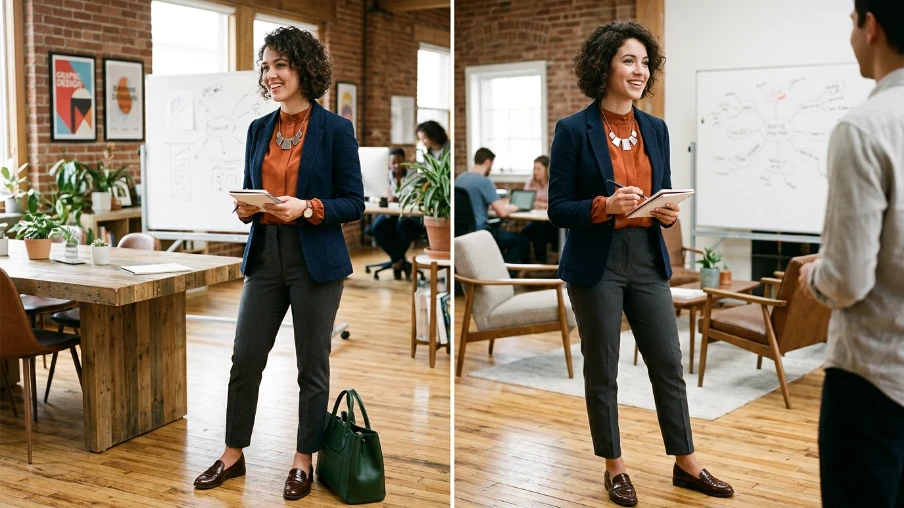
Creative industries including advertising agencies, graphic design studios, content companies, and fashion businesses have a different interview dress code expectation than traditional corporate environments. A smart business casual interview outfit for these contexts might consist of well-fitted dark trousers with a structured top in an interesting color or subtle print, a blazer worn with a creative element like a quality statement accessory, or a contemporary dress in a polished but not overly formal silhouette.
The key in creative field interviews is demonstrating that you have personal style and aesthetic awareness alongside professional presentation. An entirely generic corporate outfit in a creative interview can communicate a lack of design sensibility as clearly as an entirely casual outfit communicates a lack of professional awareness.
13. Classic White Shirt and Dress Trousers
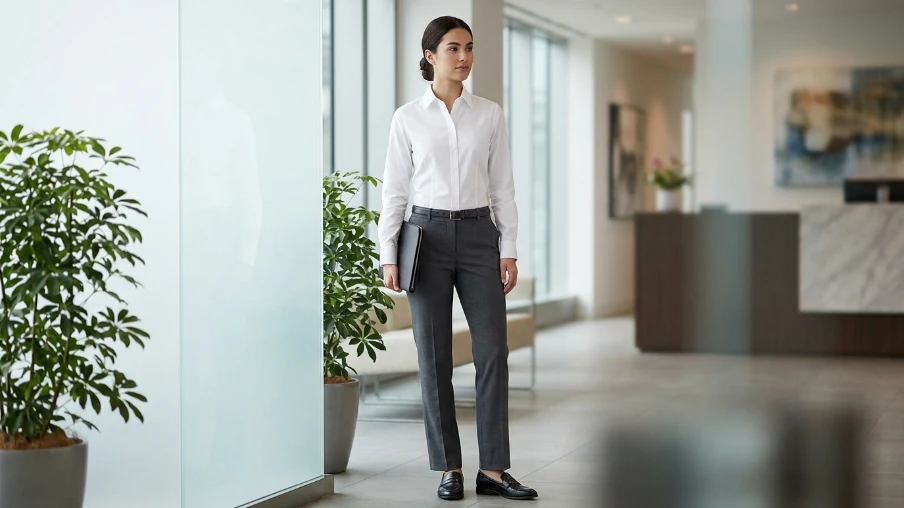
A classic white dress shirt or blouse paired with well-tailored dress trousers is one of the most timeless and broadly applicable interview outfit formulas available. The combination suits men and women equally and works across almost every professional industry and formality level when the individual pieces are well-fitted and in excellent condition.
The white shirt specifically communicates cleanliness, crispness, and an attention to presentation detail that colors and patterns do not replicate in the same way. A brilliantly white, perfectly pressed shirt is one of those details that hiring managers notice even when they cannot specifically identify why the candidate’s overall appearance reads so well. Invest in having the shirt professionally pressed before an interview if ironing is not producing a completely crease-free result at home.
14. Corporate Interview Outfit with Statement Accessory
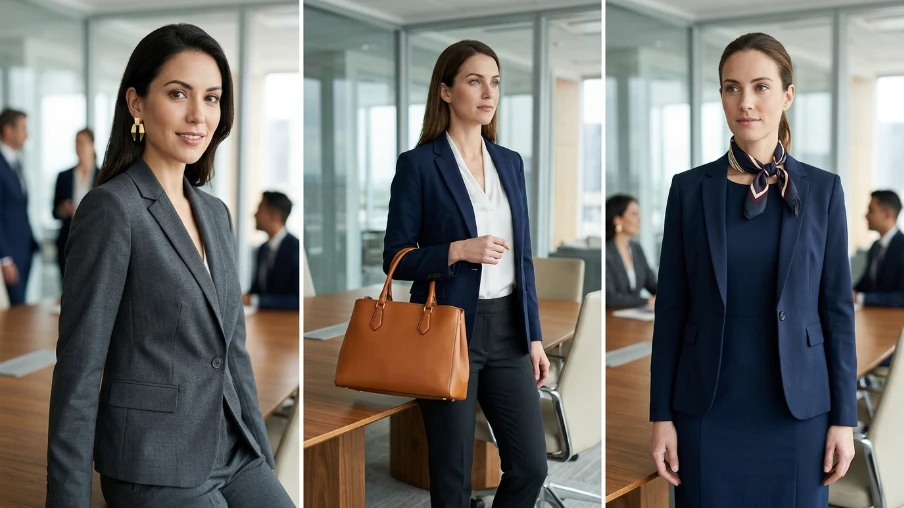
A classic corporate interview outfit in a neutral base color, a charcoal suit or navy dress pants and blazer, can be given a contemporary and memorable quality through the addition of a single, well-chosen statement accessory. A quality leather handbag in a rich caramel tone, a silk scarf tied at the neck or through the handle of a bag, or a pair of sophisticated earrings in a simple architectural shape all add a layer of personality to an otherwise conventional professional outfit.
The statement accessory approach suits candidates who want to be remembered for their personal presentation quality alongside their professional credentials. It creates a visual point of distinctiveness without the risk that a bold outfit color or unconventional silhouette might carry in a traditional interview environment.
15. Tech Industry Interview Outfit
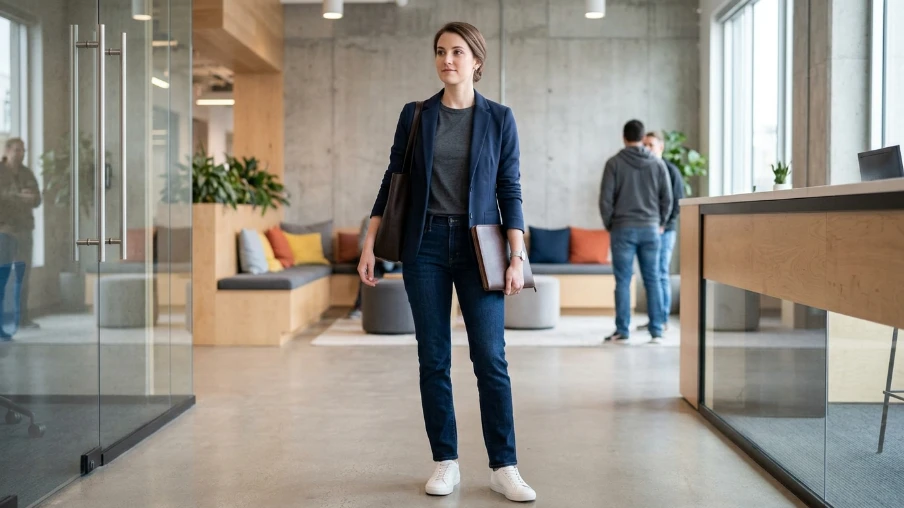
Technology company interviews have a specific dress code culture that sits consistently below the traditional corporate formal standard. A smart casual interview outfit for a technology company interview might consist of well-fitted dark jeans or chinos, a quality fitted t-shirt or simple polo in a solid neutral color, and clean leather sneakers or minimalist leather shoes.
Adding a blazer over a t-shirt creates a business casual tech interview look that demonstrates awareness of the interview context, since even in casual workplace cultures the interview itself is a slightly more formal moment than daily work, without suggesting that you have misread the company’s culture as requiring traditional corporate attire.
16. Remote Video Interview Outfit
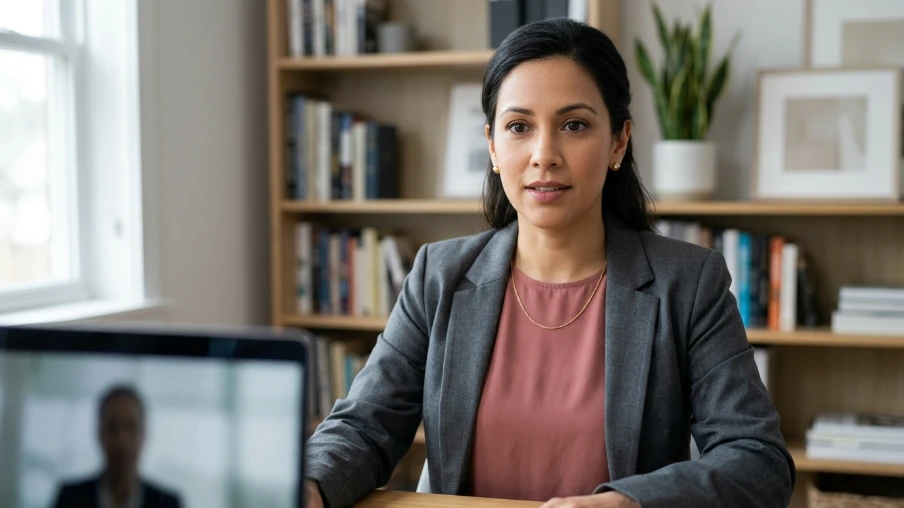
Video job interviews have specific visual considerations that differ from in-person interview dressing. The camera frames only the upper body in most cases, which means the focus of the interview outfit falls entirely on the top half of the appearance.
Choose a top or blouse in a solid, medium-toned color for video interviews. Bright white can appear overexposed under video lighting and create a bleached, flat appearance. Very dark colors can absorb too much light and lose definition. A medium-toned navy, soft blue, warm grey, or dusty rose creates the clearest and most professional camera presence.
Avoid heavily patterned tops for video interviews because fine patterns like herpetological prints or small checks can create a moiré effect on camera that appears as a visual disturbance rather than a considered design choice.
17. Second Interview Upgrade
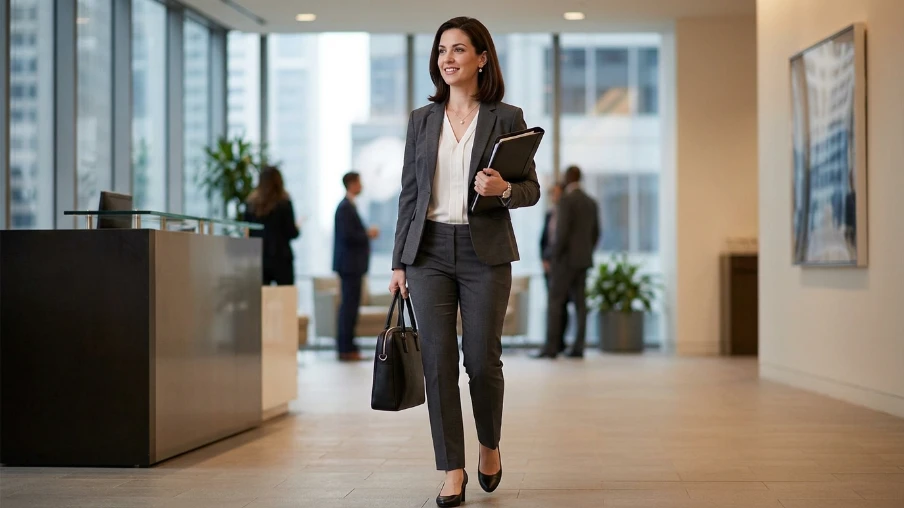
A second interview typically indicates a stronger candidacy and sometimes a higher level of meeting, including potential introductions to senior leadership or multiple team members. The outfit for a second interview should be at the same formality level as the first but deliberately different to signal that you have a broader professional wardrobe and are not a one-outfit candidate.
If the first interview outfit was a navy suit, the second interview might feature a charcoal suit or a well-put-together separates combination in a coordinating professional palette. The key is maintaining the same level of polish and formality while varying the specific outfit enough that it registers as intentional and considered rather than simply repeated.
you may also like this: 14 Stunning Ideas for Office Outfits for Women 2026 Style
18. Entry-Level Interview Outfit
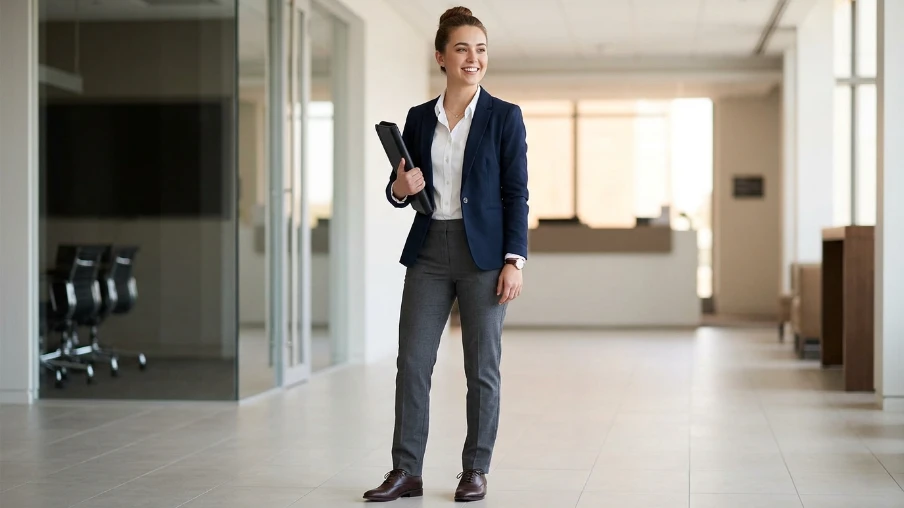
An entry-level interview outfit requires particular attention because early-career candidates often have a smaller professional wardrobe to work with and more uncertainty about what the specific company expects. The most reliable entry-level interview outfit is a simple, well-fitted business casual combination that skews toward the more formal end of that register without committing to the full formal business professional level.
A pair of neutral dress trousers or a knee-length skirt paired with a pressed blouse or dress shirt and a blazer, finished with clean, simple leather shoes, creates a complete entry-level interview outfit that communicates seriousness, preparation, and a genuine effort to present professionally without requiring a significant wardrobe investment.
What Not to Wear to a Job Interview
Understanding what to avoid is as valuable as knowing what works. These specific items undermine an otherwise professional interview outfit regardless of how well the rest of the look is put together.
Overly Casual Footwear
Shoes are one of the most consistently observed details in professional settings, and an otherwise strong interview outfit with very casual footwear creates a jarring inconsistency that hiring managers notice more than most candidates expect. Avoid flip flops, athletic sneakers, heavily worn shoes, or very high platform styles for most interview contexts. Clean leather shoes, quality loafers, or low block-heeled court shoes suit the widest range of interview environments.
Excessive Fragrance
Interview rooms are often small, enclosed spaces where personal fragrance is amplified significantly. Wearing a heavy application of perfume or cologne to a job interview can be distracting and in some cases creates an uncomfortable physical environment for the interviewer. Apply fragrance very lightly before a job interview and allow it to settle fully before leaving the house.
Visibly Wrinkled Clothing
Wrinkled interview clothing communicates a lack of preparation and attention to detail that contradicts the professional image every interview outfit is intended to project. Check and press every garment the evening before the interview rather than the morning of, when there is typically less time and more stress to manage.
Conclusion
Interview outfit ideas in 2026 are more varied and industry-specific than they have ever been, which makes choosing the right look both easier, because there are more acceptable options, and more important, because getting it wrong for the specific company culture is more noticeable than it used to be.
The most important principle across all 18 ideas in this guide is that fit, condition, and appropriateness for the specific environment matter more than brand, price, or following a specific trend. A well-fitted, well-pressed outfit in an appropriate style for the company you are meeting communicates the professional awareness and personal investment that every hiring manager is looking for before the conversation even begins.
Frequently Asked Questions
Q1. What is the safest interview outfit choice if you are unsure of the dress code?
Business casual leaning toward business professional is the safest default when the dress code is uncertain. For women, tailored trousers or a knee-length skirt with a blouse and blazer. For men, chinos or dress trousers with a dress shirt and blazer. This level of dress is appropriate across most industries and communicates professionalism without over or under-dressing for most environments.
Q2. Can you wear color to a job interview?
Yes, with some consideration for the industry and formality level. Solid medium tones in navy, burgundy, forest green, or soft blue are all professional and add visual interest without the risk that very bright or unconventional colors carry in traditional professional settings. Save very bright or bold colors for creative industry interviews where personal aesthetic awareness is part of what is being assessed.
Q3. What shoes are most appropriate for a job interview?
Clean leather Oxford shoes or leather loafers for men. Low-heeled court shoes, block-heeled pumps, or simple leather flats for women. All interview footwear should be clean, unscuffed, and in good condition. Avoid very casual, very worn, or very high-heeled shoes for most professional interview contexts.
Q4. Should I wear jewelry to a job interview?
Yes, but keep it understated for most professional interview contexts. Simple stud earrings, a classic watch, a slim necklace, or a simple ring are all appropriate. Avoid very large, noisy, or distracting jewelry pieces that create sound or movement during the interview. The general principle is that accessories should complement the professional outfit without drawing more attention than the conversation.
Q5. How important is the fit of interview clothing?
Fit is one of the most important factors in how professional interview clothing reads. A well-fitted outfit in an affordable fabric reads as more polished and professional than an expensive garment in the wrong size. Before an interview, check that the jacket does not pull across the shoulders, the trouser hem sits at the right length, and the shirt or blouse is not pulling at the chest or back when you sit. If necessary, basic tailoring alterations are a worthwhile investment for key professional wardrobe pieces.